
Sunday 15th November 2026, 4pm – St John’s Church Broadstone
Interval refreshments included
Tickets: £13 Adults, £3 U18
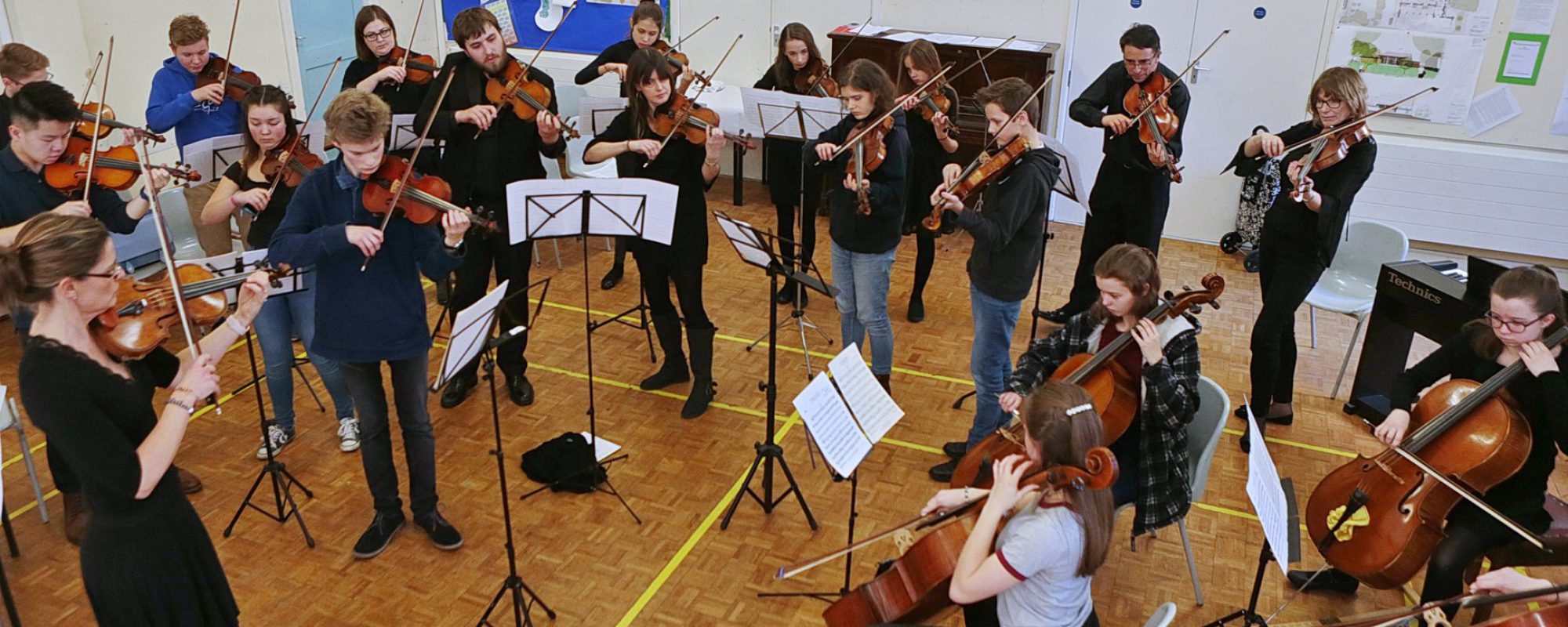
The Quartet will be training some of our Poole Society for Young Musicians Youth Camerata String players in Chamber music earlier in the day as part of our Albert and Eugenie Frost Trust Scheme. Our Camerata members will join the quartet for an item in the programme.
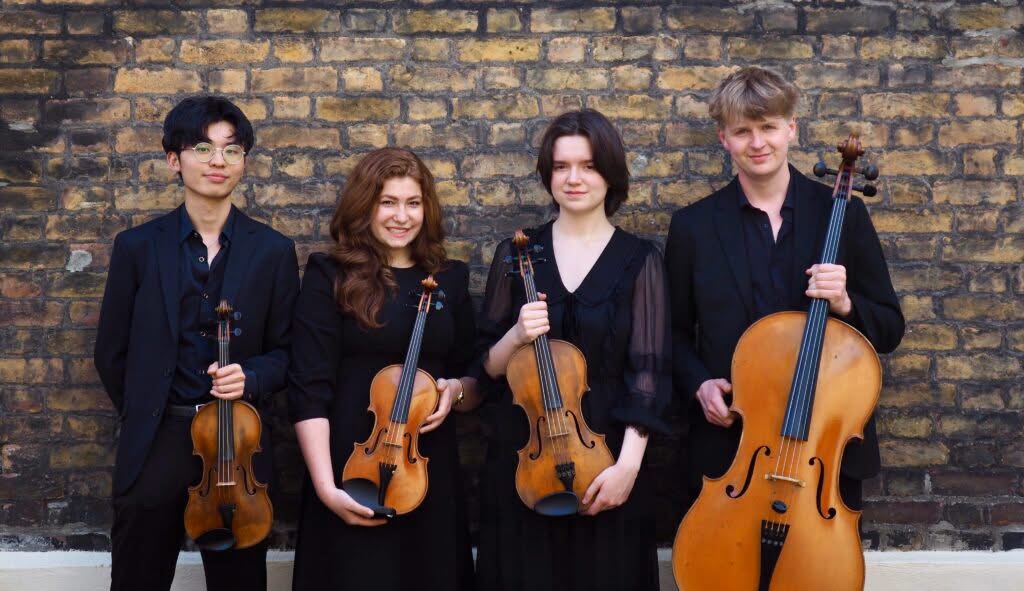
The Award winning Neruda Quartet was founded at the Royal Academy of Music in October of 2024. The quartet’s name is a tribute to Moravian violinist, Wilma Neruda, one of the first female virtuosos and chamber music enthusiasts. Her fame was such that even Arthur Conan Doyle references her in A Study in Scarlet. The Neruda Quartet has been very fortunate to be able to benefit from the chamber resources of the Academy by having coachings and study days with the likes of Marije Johnston, Anthony Marwood, Sini Simmonen, John Thorne, Levon Chilingarian, Yoanna Prodanova, and Jim Sleigh.
Neruda has been very honoured by being chosen for several opportunities through RAM, including being selected as the only representatives of the Academy at the International Orchestral Symposium that was held at the Tianjin Juilliard School in May 2025. Additionally, Neruda is looking forward to a busy autumn and winter of concerts around London and the UK. In February this year the Neruda Quartet were awarded a prestigious place on the Tillet scheme, alongside the Dogada Wind quintet who appeared in Broadstone Music Series earlier this year. :https://www.thestrad.com/news/artists-announced-for-the-2026-tillett-debut-scheme/20924.article
Members of the Neruda Quartet:
Adriana Bec – violin
Yiu Hang Leung – violin
Mina Mazur – viola
Jim Goss – cello
Programme:
(Note Change of Programme)
Mozart – String Quartet in B Flat major K 589
Beethoven – String Quartet in A minor, opus 132
Our Youth Camerata will study and perform Holst’s Brook Green Suite with the Neruda quartet.
The most compelling connection between Mozart’s B-flat major quartet and Beethoven’s Op.132 is the transformation of musical conversation into musical thought. Mozart shows how four instruments can converse with extraordinary subtlety; Beethoven shows how that same conversation can become a meditation on human suffering and renewal.
They are linked by their shared belief that the string quartet can sustain a genuine conversation among four independent voices. Both composers exploit the cello’s expressive possibilities, weave counterpoint into their musical structures and use harmonic colour to enrich their themes.
The difference lies in the scale of the expressive ambition. Mozart creates a world in which grace, intellect, lyricism and unease coexist within abeautifully balanced structure. Beethoven creates a world in which those elements can become part of an existential journey through conflict, stillness, recovery and renewed life.These are differences of emphasis rather than absolute opposites. Mozart’s music is not merely decorative, and Beethoven’s is not merely dramatic.Mozart can be harmonically unsettling, while Beethoven can achieve extraordinary tenderness and formal clarity.
Mozart String Quartet k569 in B-flat major – Four movements. Composed in 1790
This is work of lucid Classical design, graceful melodic exchange and finely balanced instrumental dialogue, with darker harmonic turns beneath its apparent poise.
The second of the three Prussian Quartets. Mozart’s String Quartet No.22, it also sometimes identified through other numbering conventions, so the catalogue number K.589 is the clearest way to specify the work.
Beethoven’s Op. 132 was written in 1825, during the extraordinary final period of his life. It is one of his late string quartets, works that are much more experimental, personal and emotionally intense than his earlier music.
The most famous part is the third movement, the “Heiliger Dankgesang” (Holy Song of Thanksgiving). Beethoven had recently suffered a serious illness, and this movement feels like a musical expression of recovery, gratitude and spiritual reflection. It alternates between very slow, almost sacred music and sections marked “Neue Kraft fühlend” — “feeling new strength.”


You must be logged in to post a comment.